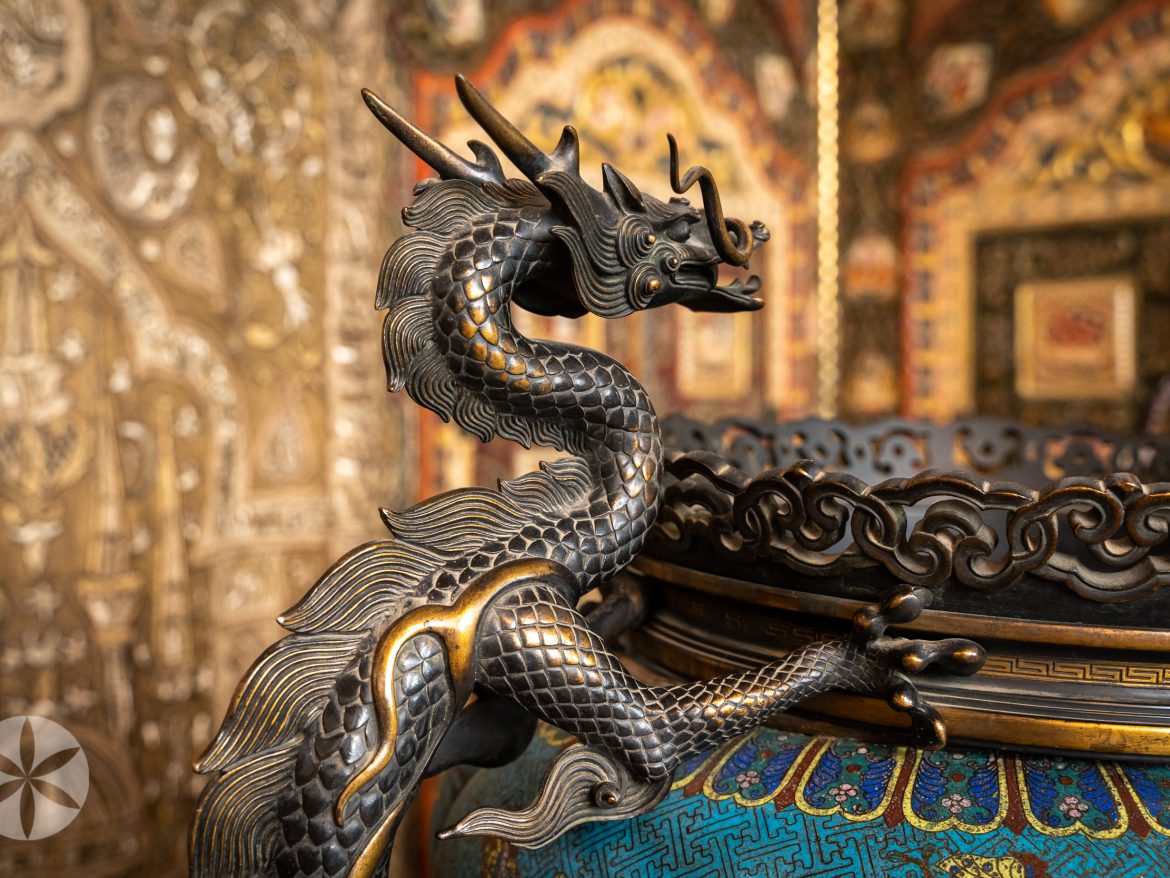
Oriental Salon
The Oriental Salon takes its name from the wall panelling, which the count bought in 1905 at the Dorotheum auction house in Vienna from the estate of the Serbian king Milan Obrenovic. It was made in Damascus and is carved from cedar wood, covered with stucco and gilding. The upper textual calligraphic part consists of 99 inscriptions glorifying Allah. The doors at the bottom are now defunct; in the original oriental interior, there were cabinets behind them for storing blankets and pillows.
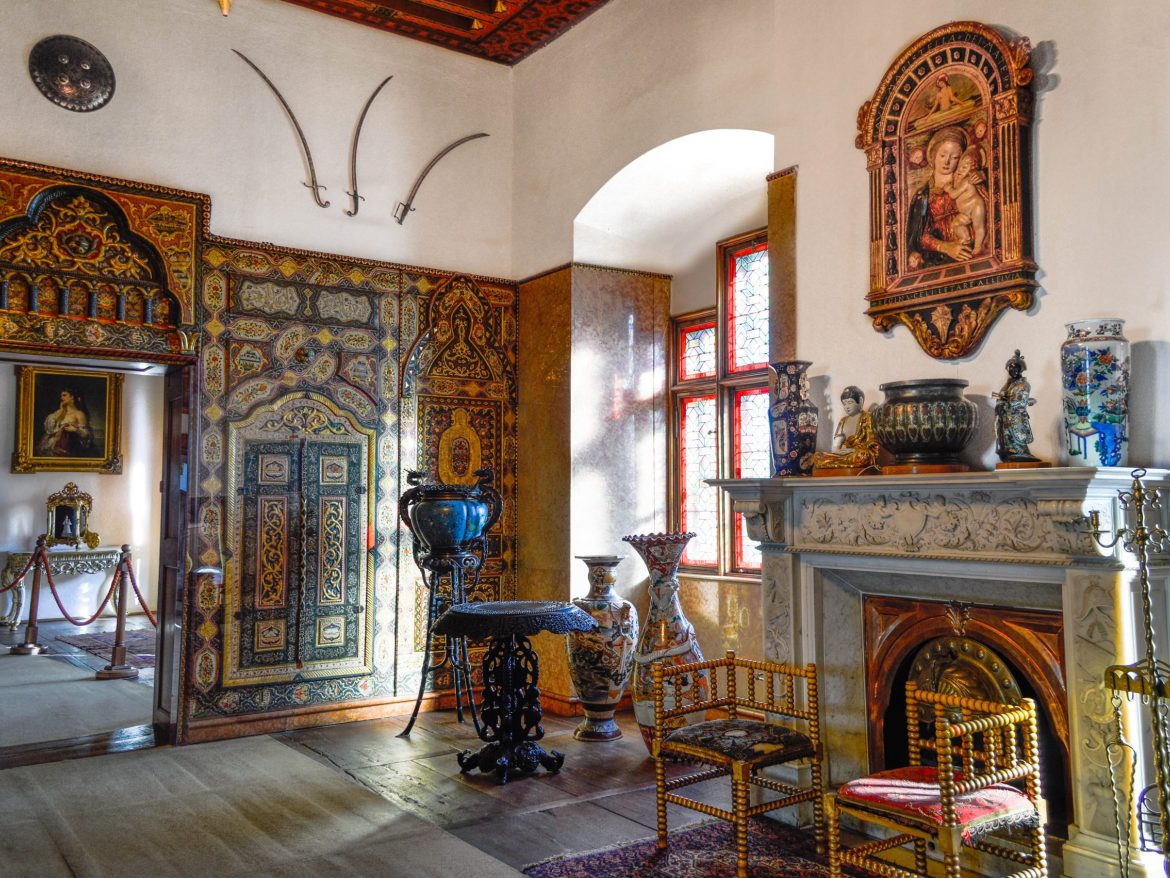
On the wall above the mirror, in the far left corner, is a medallion with the date of the Islamic calendar, the year of the Hijra 1228. After a complicated conversion of the Islamic to the Gregorian calendar we use today, we get the year of the creation of the panelling, namely 1813-1814. The terracotta relief of the Madonna and Child is the work of an Italian master from the circle of Benedetto da Majano at the end of the 15th century. It belongs to the collection of count Pálffy, which has been preserved in its original place. The oldest vase in the room is a blue and white vase in front of the mirror, dating from the 16th century during the Chinese Ming dynasty. During count John Pálffy's lifetime, this room served as his study. The arms above the panelling come from Persia, India, Turkey and the Kingdom of Hungary. The moorish ceiling above your heads was made by the Colli company in 1906.