First Room
We are in the First Room, in the Rentmeister wing, which was built around the middle of the 17th century. A residential part was added to the castle wall from the 15th century. This rebuilding was started by the palatine of Hungary, Paul Pálffy (1590 - 1653), who was the first of his family to aquire hereditary ownership of the Bojnice manor for himself and his descendants. His intention in this rebuilding was to enlarge the living quarters of the castle. The administrative centre of the manor was located here.
The Pálffy family was one of the most important noble families in the Kingdom of Hungary in the modern period. They were related to the Bakóc family, from which they also took their coat of arms with a stag and a half wheel. The hereditary title of count for his family was given to the prominent military commander, anti-Ottoman warrior Nicholas II. Pálffy. Several members of the family held the highest political or military positions in the kingdom, such as palatine, chancellor, filed marshal, general of the cavalry.
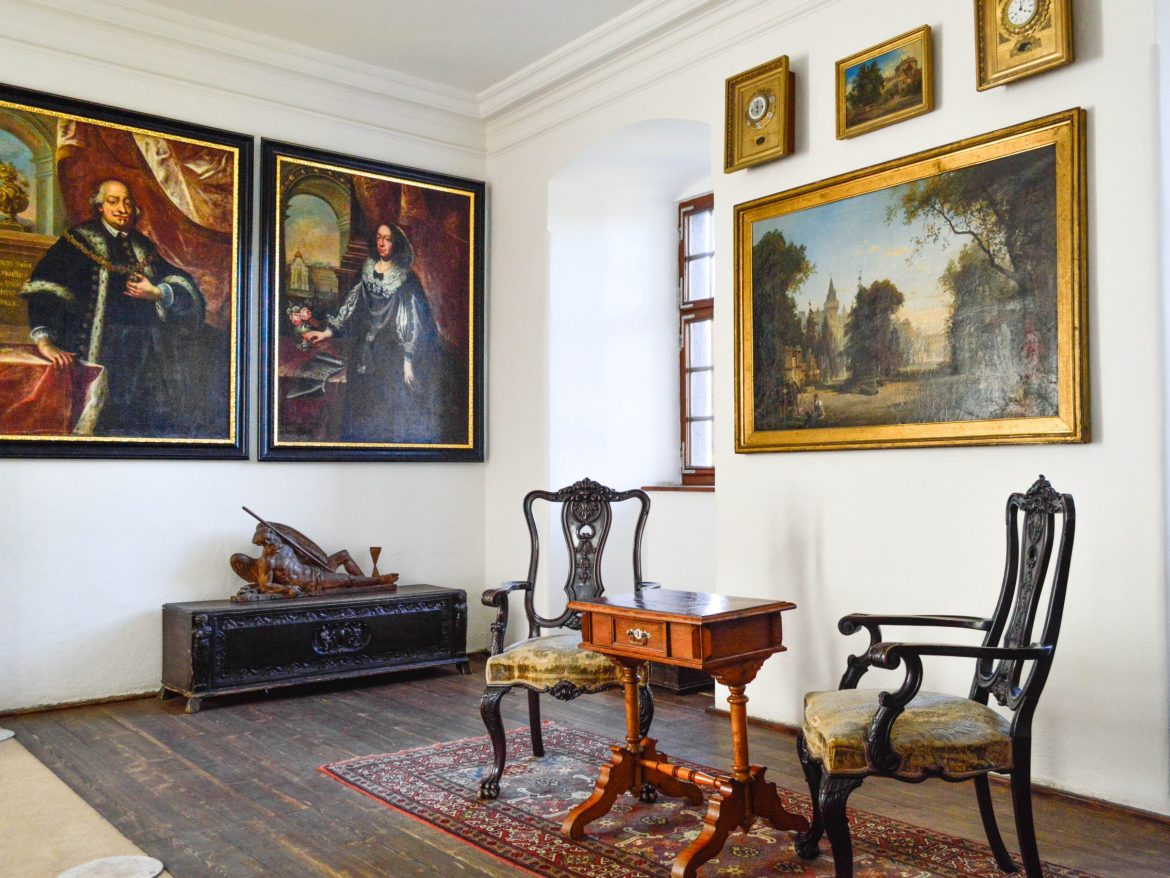
Paul Pálffy and his wife Frances Khuen can be seen in the portraits at the entrance door. Opposite you can see the picture of imperial marshal John V. Bernhard Stephan Pálffy (1663 - 1751) later palatine of Hungary and advisor to the sovereign Maria Theresa. Below the portrait of field marshal John V. Pálffy's portrait is an Italian Renaissance drawer chest from the 16th century. It is the oldest piece of furniture in our collections. Behind you, you can see John Pálffy (1829-1908), the most famous noble owner of Bojnice castle. The portrait is by Francesco Desilvestri and is a copy of a portrait of John Pálffy based on the original by Václav Brožík from 1891. Between the clocks, you can see the painting Bojnice castle by Alexander Brodszký from 1856. The oil on canvas painting depicts Bojnice castle before the Romantic rebuilding that began in 1889 and ended in 1910.
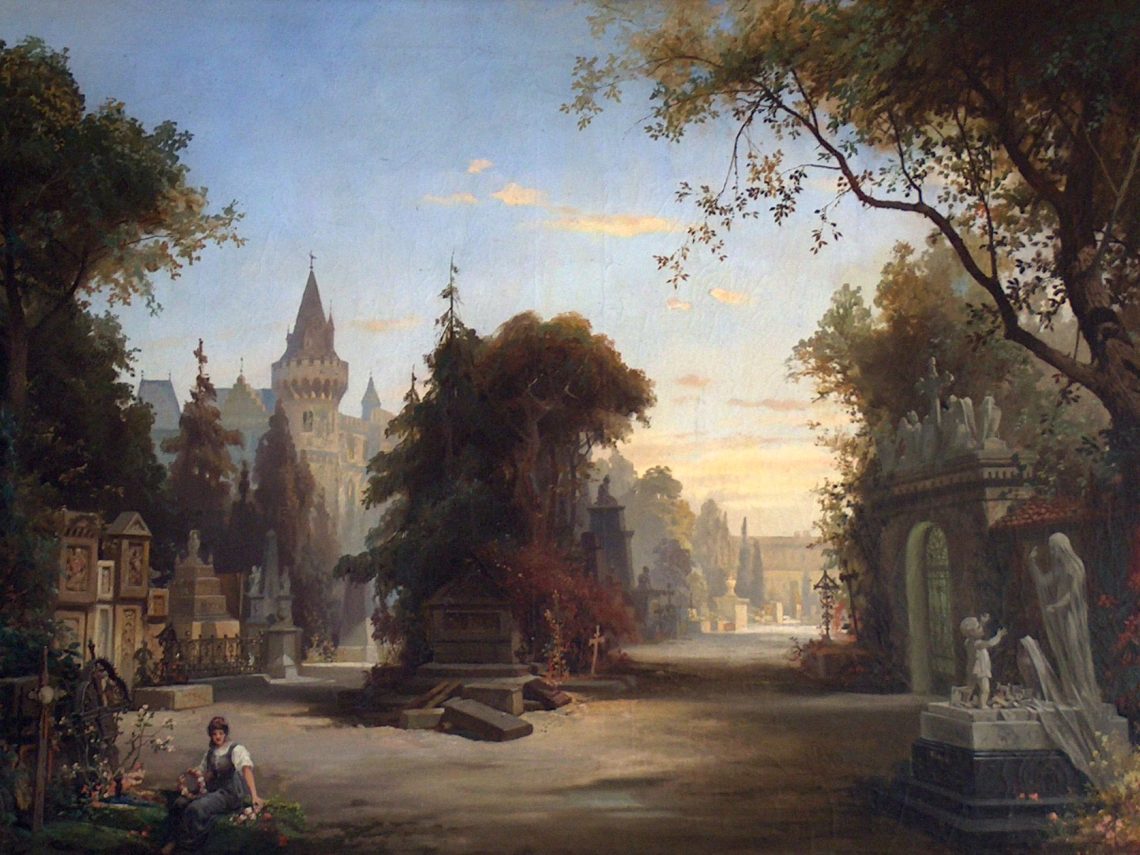
Landscape with a Castle, studio of Herman Burghart, oil on canvas, 19th century
The most famous and the last noble owner of the castle, count John Pálffy, admired art and architecture. He had his derelict Baroque castle rebuilt into a magnificent chateau in the spirit of the motto: "Admemoriam gloriae antiquae" - to the memory of the past glory to be more precise. It was a monument to a bygone glory and a return to a fading past, at a time of ending feudalism, developing industrialisation and the rise of a new nobility. The old nobility was losing its privileges and had to adapt to the many changes taking place in society.
John Pálffy drew inspiration for the rebuilding of Bojnice castle from his many trips abroad. He was fond of castles in Tyrol, Italian Renaissance architecture and also castles in France. The count had refined aesthetic taste, but the question of authenticity was not particularly important to him. If he could not place the original somewhere, he simply had a copy made. Pálffy built his idea of Romanticism on individual parts of the older castle, mostly from the 16th to 17th centuries. For the sake of aesthetic values, he had some of the unsightly old parts of the castle removed and replaced with new ones. The architect of the castle, Jozef Hubert, was just an instrument in the hands of his client, who put Bojnice castle together into a harmonious whole.